
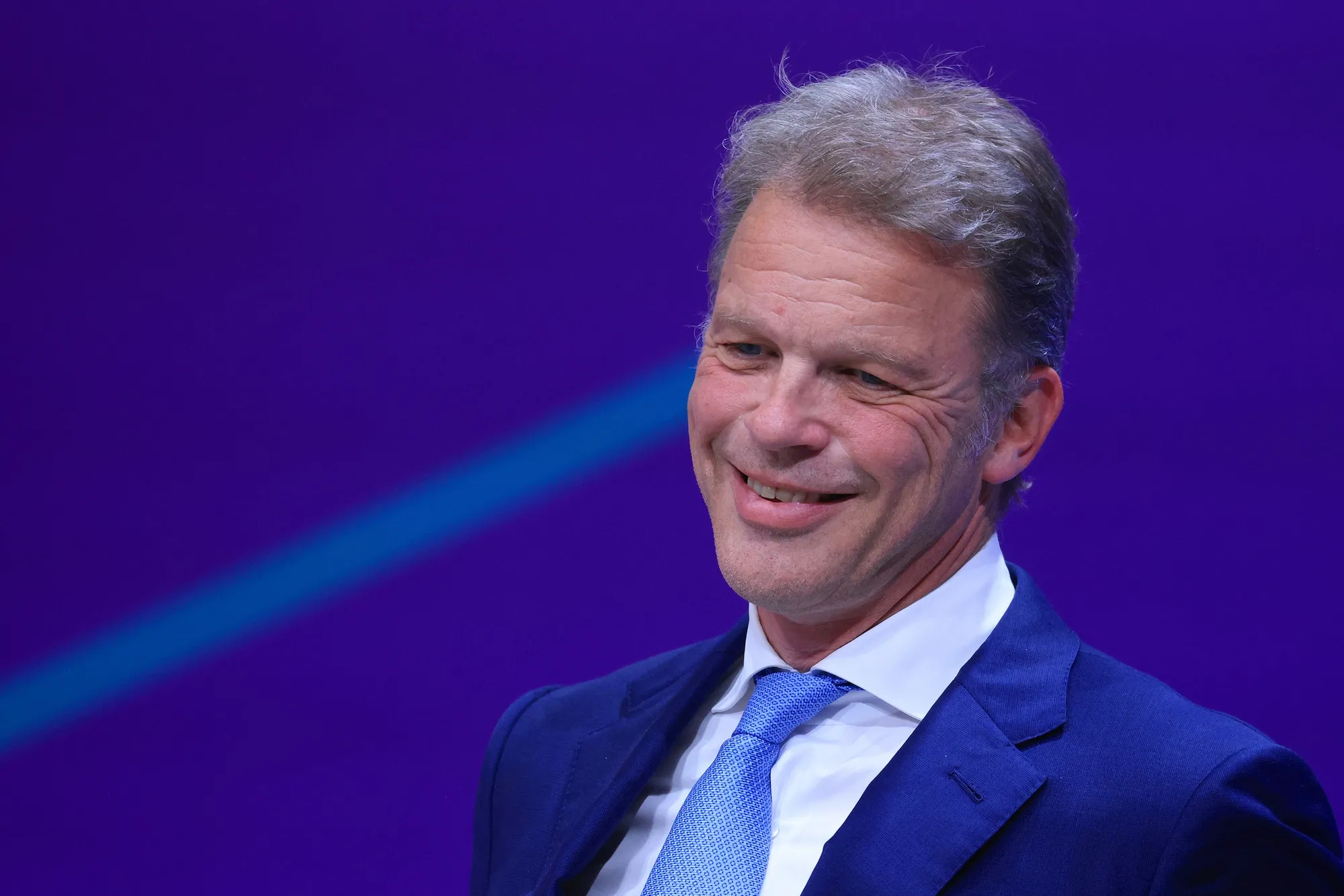
Christian Sewing Reaffirms Deutsche Bank’s Rising Profit Targets for 2026 Onwards

Deutsche Bank CEO Christian Sewing has again put himself at the center of Europe’s financialsector narrative with a bold reaffirmation of the bank’s profit ambitions for 2026 and beyond. The message is clear: years of restructuring, cost-cutting, and strategic realignment have positioned the bank to create a sustained growth period characterized by rising returns. These newly set targets also reflect quite a contrast in tone from one of caution to one of calculated confidence, signaling that Sewing believes the bank’s long rebuilding process finally started to yield durable results.
Under Sewing’s helm, Deutsche Bank has been on a long and arduous journey. At the time of his arrival in 2018, the institution was still dogged by scandals, hampered by legacy issues, and losing ground in the fierce competition to Wall Street behemoths and European peers. Rounds of restructuring, workforce cuts, legal settlements, and strategic recalibration ensued. Slowly but surely, these efforts started to stabilize the bank and lay grounds for a genuine recovery.
Now, looking toward 2026–2028, Sewing has reaffirmed one crucial ambition: the bank’s main profitability metric, return on tangible equity, must rise every year from 2026. In 2028, the company said it wants to top a RoTE of more than 13 percent, an aggressive target extending well beyond earlier ambitions. Sewing underscored that such a trajectory is not some aspirational dream but is, in fact, an operational plan underpinned by hard numbers, expense controls, and business-line strategies.
One of the core pillars of the bank’s roadmap is revenue expansion. Deutsche Bank is targeting a push of its total revenue from about 32 billion euros to nearly 37 billion euros over the next three years. This will be achieved by doubling down on the historically high-return businesses: fixed-income trading, global markets, debt capital markets, and advisory services. These operations have been showing strong performance in recent quarters and offer momentum for the next growth stage.
Equally important is Sewing’s commitment to operational efficiency. Under the new forward plan, Deutsche Bank projects achieving gross cost savings of about 2 billion euros by 2028. A significant portion of this will be driven by automation, streamlining of platforms, and deeper integration of artificial intelligence across operations. Cost-to-income ratio projections have also been made to fall below 60 percent, a level considered crucial to long-term increases in profitability.
Investor sentiment is another area Sewing strives to build on. Deutsche Bank is set to increase its shareholder payout ratio to around 60 percent of net profit from 2026. Higher dividends and share buybacks are supposed to restore trust in the bank’s long-term value proposition. For a bank that has spent years trying to defeat skepticism, this new focus on investor returns represents a marked change of course.
Despite this optimism, Sewing still recognizes that challenges may lie ahead. The wider European economy is beset by uncertain growth, complex regulatory pressures, and geopolitical fluctuations that may impact banking performance. Third, a few of Deutsche Bank’s core business lines-especially investment banking and trading-are cyclic and sensitive to market volatility; Sewing’s targets presume that these divisions will keep performing strongly, which is never a given.
Yet, one of Sewing’s strong suits as a leader has been an insistence on balancing ambition with realism. He knows Deutsche Bank cannot count on favorable external conditions alone. Instead, he has underscored internal discipline time and again: investing in technology, cutting operational inefficiencies, enhancing client service, and concentrating resources only where the bank enjoys some comparative advantage. These reaffirmed targets for 2026 and beyond represent an important inflection point for Deutsche Bank.
For the first time in more than a decade, this bank is not only stabilizing but actually intends to grow. If the strategy succeeds, Deutsche Bank can re-establish itself as Europe’s flagship banking powerhouse, capable of challenging global rivals once again. The message from Sewing to employees, investors, and other stakeholders is clear: the bank is done playing defense. The next chapter is about building, expanding, and delivering consistent returns. Whether the next three years confirm that confidence will depend on disciplined execution, shifting market dynamics, and the bank’s ability to sustain momentum through uncertain economic times. But one thing is clear: Sewing believes Deutsche Bank is ready to rise.

