
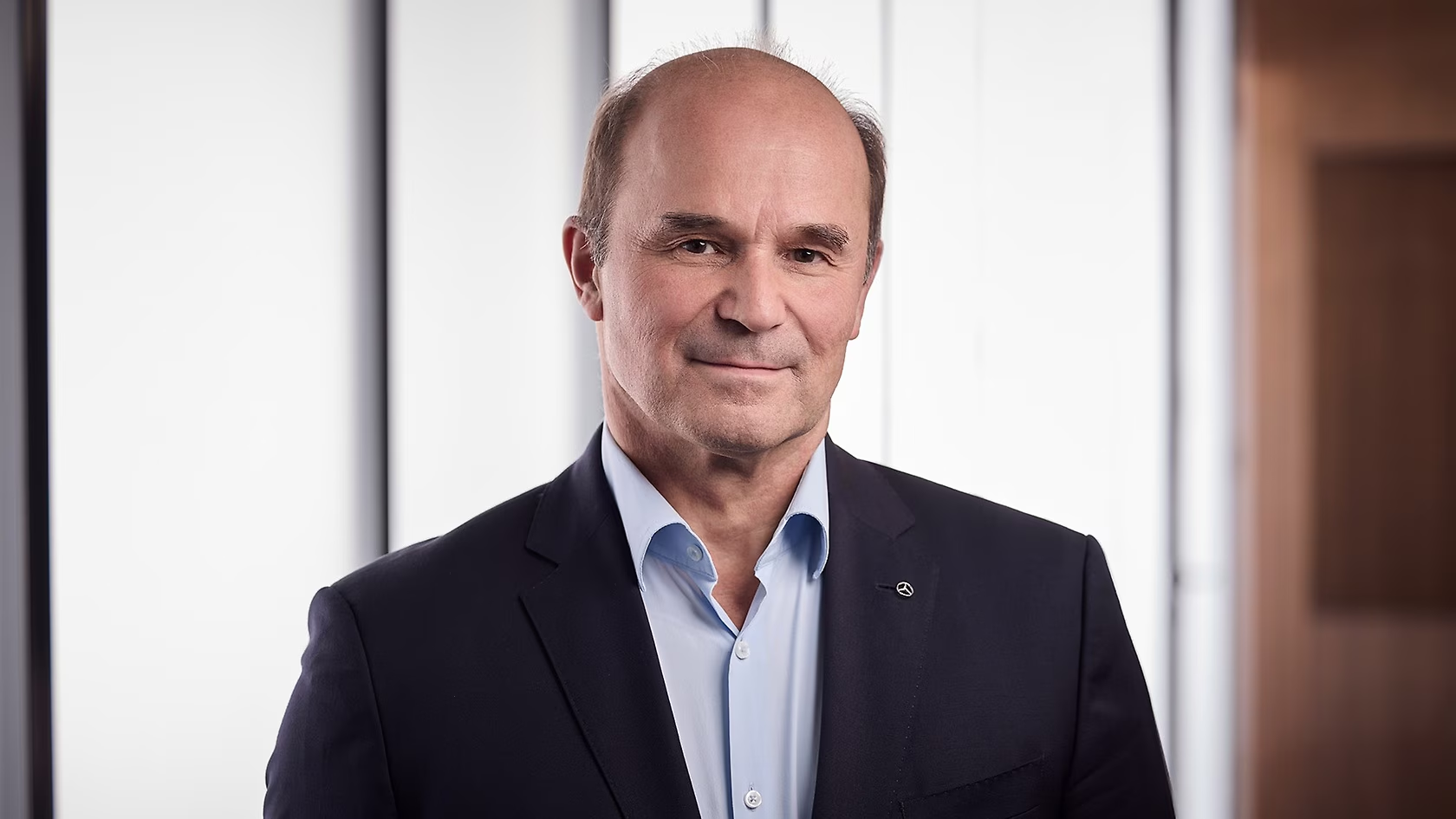

Indeed, the chief executive officer of the global chemical behemoth, BASF, Martin Brudermüller, reiterated the company’s commitment to its German facilities despite the challenges facing the industrial sector in the wake of escalating global competition. There has been speculation about the possibility of large companies reducing production levels within the country due to the high production costs.
BASF is Europe’s leading chemical enterprise, but its flagship integrated production facility is located in Ludwigshafen, which happens to be the world’s largest chemical complex. In recent years, growing electricity and gas costs, owing to geopolitical tensions and changes in energy sources, have been contributing substantially to the operating expenses of energy-intensive industries in the German economy.
In this regard, to address the concerns that have been raised, Brudermüller emphasized that Germany remains a strong foundation of its global network strategy. The CEO admitted that the cost environment currently is a challenging issue; however, he emphasized that their strong roots in industry and its cutting-edge infrastructure remain a strong competitive advantage for the company in the industry. Quitting Germany would affect its innovation ecosystem and value chains.
Brudermüller pointed out that BASF is pursuing efficiency enhancements, digitalization, and sustainability initiatives at its German plants to counter higher cost structures. Efficiency-enhancing initiatives include improving energy use, plant modernization, and accelerated use of low-emission technology. The company adopts digitalization techniques to boost productivity and eliminate operational inefficiencies.
However, on the other hand, the BASF CEO emphasized that a competitive future for industry cannot and shall not be achieved through internal factors only. The BASF CEO urged policymakers to develop a more supportive context for industry, including access to energy, regulation, and green transformation incentives. Brudermüller has already emphasized the importance of not opposing economic realities and climate objectives but matching the latter to the former.
This reaffiliation becomes extremely relevant in a critical phase for Germany’s chemical industry as their export-oriented economy relies heavily on this industry. Chemicals act as a raw material for industries such as automobile, construction, pharmaceuticals, and consumer durables. A huge pullout by major companies such as BASF could result in serious repercussions in this context.
Brudermüller further illustrated the global challenge being faced by BASF with their balance act globally. Though their focus is based in Germany, they are continuing to make targeted investments in growth regions with more attractive cost structures, such as Asia and North America, in order to achieve competitiveness on a global basis.
On the internal front, the company is undergoing organizational shifts in an attempt to adjust to the market trends. The portfolio optimization, cost reduction, and divestiture activities are the strategies that the company uses in improving its profitability. Brudermüller pointed out that the strategies are aimed at securing the future of its core business activities.
In addition, the comments by the CEO are also indicative of the challenges that are currently facing the European industry. The increasingly competitive international market for chemicals, with the rise of new and strong players from China and the Middle East, poses significant risks for European companies that have to cope with stricter environment protection and rising production prices influenced by these new competitive dynamics on the market. Despite these difficulties, Brudermüller painted a cautiously optimistic picture.
He emphasized the company’s long history of being able to adjust to structural change and his confidence that Germany remains a very attractive location for industry if decisions are made to benefit this aim. Innovation, talent, and collaboration between industry, universities, and the state were named as core strengths and not to be underestimated. Going forward, BASF intends to invest in R&D in Germany in the area of sustainable chemistry, circular economy solutions, and climate-neutral production methods. The message was clear: BASF is not abandoning ship on Germany. BASF is looking to transform and compete. The message was clear from Brudermüller: BASF is not abandoning ship on Germany. Basf is looking to transform and compete. He urges politicians to make sure that Europe’s backbone is strong.

