

The Controversy Surrounding Sonic Weapon Allegations in Serbia
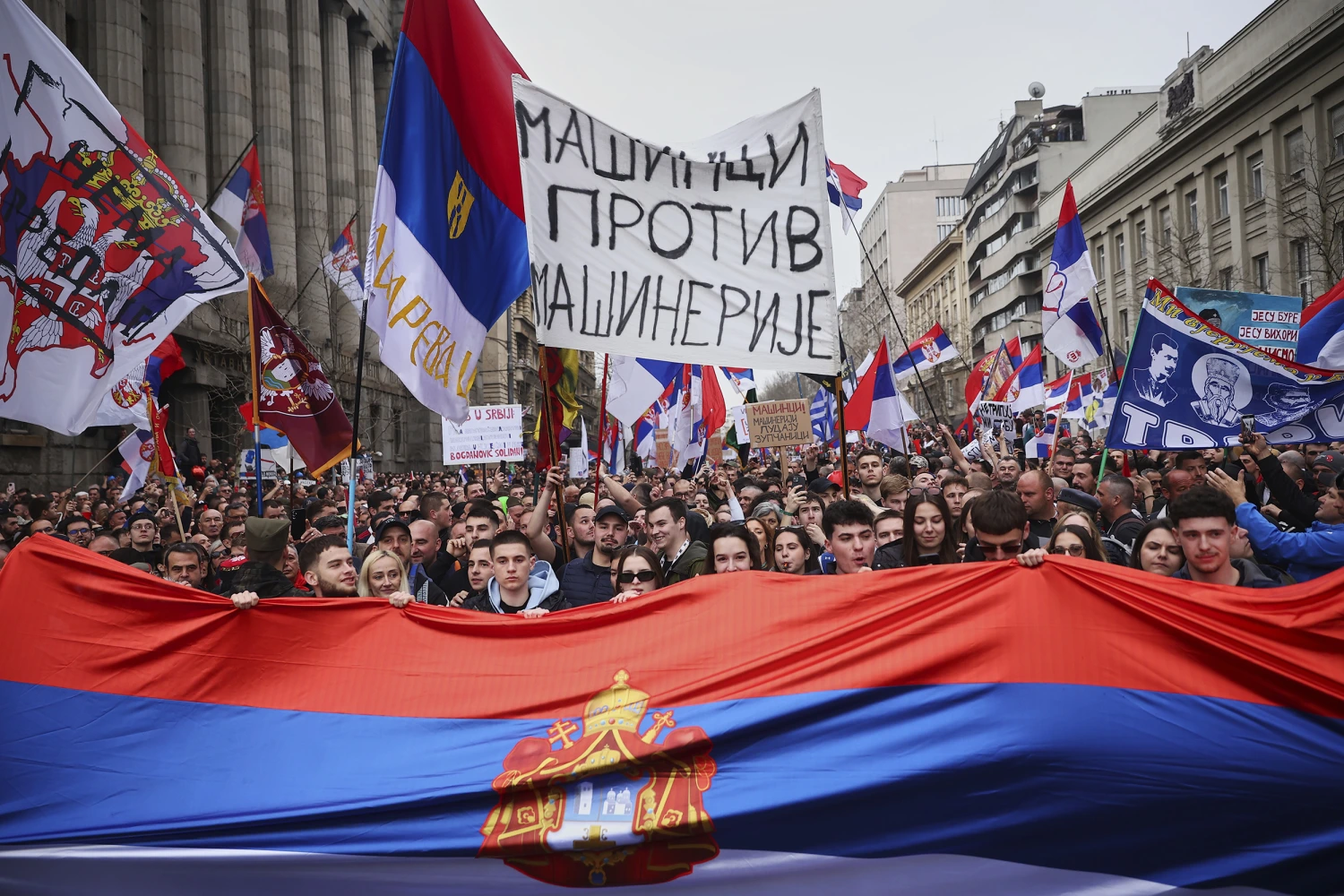
In a stunning turn of events during the largest protest in Serbia’s history, allegations surfaced claiming that Serbian authorities used a banned sonic weapon to disperse the crowds in Belgrade. Protesters reported hearing a piercing sound that caused panic, sparking fears that the police might have deployed the controversial device. However, President Aleksandar Vučić has firmly denied these accusations, calling the claims a “vile lie” and vowing to launch an investigation. The protests, which saw hundreds of thousands of Serbs take to the streets, are part of growing unrest over government policies, but this latest development has added fuel to the fire.
What Happened During the Protest in Belgrade?
The protests in Belgrade were described as the largest in Serbia’s history, with hundreds of thousands of citizens rallying against government actions. Protesters were calling for a variety of political and social changes, including improvements in the country’s democracy and protection of civil rights.
As the crowds gathered, a strange event occurred during a fifteen-minute period of silence, meant to honor victims of violence. Eyewitnesses reported hearing a sudden, piercing noise that seemed to come from nowhere, causing the crowd to scatter in panic. This noise was described as loud, sharp, and unsettling, with many protesters fearing it was a sonic weapon designed to disperse crowds.
Sonic Weapon Allegations: What is a LRAD?
The sound that caused such alarm led many to believe that it was the work of a Long Range Acoustic Device (LRAD), often referred to as a sonic weapon. This device emits a high-pitched sound that can cause intense discomfort or incapacitation for anyone within its range. It is sometimes used by military or law enforcement agencies to control crowds or disperse protests, and it is known for its ability to induce pain or disorientation.
Military analyst Aleksandar Radic spoke to local media, stating that the noise must have come from an LRAD. He explained that these devices are designed for “incapacitation,” meaning their primary purpose is to disrupt and scatter crowds quickly.
The allegations raised concerns about the legitimacy of the protest and the government’s response to growing opposition. If true, the use of a sonic weapon would represent a severe escalation in the way protests are handled in Serbia, especially since such devices are banned under Serbian police law.
Serbia’s President Denies the Claims
President Aleksandar Vučić immediately addressed the nation, calling the allegations of using a sonic weapon “a vile lie.” Vučić, who has been at the center of a series of controversial policies and decisions, rejected the idea that police forces had deployed the device against protesters.
“I have had the opportunity to see this weapon abroad, and it emits a strong, piercing sound,” Vučić said. “That sound was not heard on the streets of Belgrade on Saturday night.”
Despite his denial, Vučić announced that an investigation would be conducted to determine the truth of the claims. He also warned that those spreading “such a notorious lie” should face prosecution. This response from the president has done little to quell the growing anger and frustration from protesters and critics of the government.
The Role of the Belgrade Center for Security Policy (BCSP)
The Belgrade Center for Security Policy (BCSP), a Serbian non-governmental organization, condemned the government for allegedly using the banned sonic weapon. According to the BCSP, the use of a Long Range Acoustic Device would be a blatant display of force aimed at destabilizing the protest and discrediting the protesters.
“This act represents a blatant display of force and an attempt to incite chaos, aiming to delegitimize protests and criminalize peaceful citizens,” the BCSP said in a statement.
The group emphasized that using a sonic weapon would be illegal under Serbian law, which prohibits the use of such devices by police forces. They also pointed out that the weapon’s use would represent a serious violation of the rights of the protesters, who were exercising their right to free speech and assembly.
A Growing Political Crisis in Serbia
The accusations of police brutality and the potential use of a banned sonic weapon have added new layers to the political crisis that is unfolding in Serbia. The protests, which have been building for months, have become a symbol of widespread dissatisfaction with President Vučić and his government. Critics accuse Vučić of undermining democracy, restricting media freedoms, and cracking down on opposition voices. The protests have drawn large crowds of people who feel their voices are not being heard by those in power.
The Serbian government’s handling of the protests has sparked outrage both at home and abroad. The use of force to break up peaceful demonstrations could have significant consequences for the government’s international reputation, especially within the European Union, where Serbia has aspirations to join.
What’s Next for Serbia?
As the investigation into the allegations of sonic weapon use unfolds, the political situation in Serbia remains tense. President Vučić has firmly rejected the claims, but his response has done little to calm the anger of those who believe the government is using excessive force to maintain control.
The outcome of the investigation will likely play a significant role in shaping the future of Serbia’s political landscape. If the accusations are proven true, it could lead to further protests and demands for accountability from the government. If the investigation clears the government of wrongdoing, it will be seen as a victory for Vučić, but the trust in his leadership will still be severely strained.
A Divided Nation and a Heated Political Debate
The controversy surrounding the use of a sonic weapon in Belgrade highlights the deep political divisions in Serbia. With the investigation still ongoing, the public remains divided on the truth of the claims. On one side are the protesters, who believe the government has gone too far in using force against them. On the other side is President Vučić, who insists that the allegations are baseless and that the use of such a weapon never occurred.
As Serbia grapples with this controversy, the world will be watching to see how the government responds to the growing discontent within the country and how the investigation into the alleged use of a sonic weapon unfolds.