Could Germany’s Left Surprise in the Election? The Linke Party’s Unexpected Surge

Introduction: The Left’s Unexpected Comeback in Germany’s Election
Germany’s upcoming election is generating more excitement than expected, with surprising shifts in voter support that are shaking up the political landscape. The left-wing party Die Linke—which not long ago seemed to be on the brink of collapse—is suddenly experiencing a resurgence. As tensions rise between the far-right and the left, the Linke party is gaining traction among women and younger voters, offering an alternative to the growing influence of the far-right in the country.
The return of the Linke as a major force in German politics has raised eyebrows, and with only days left before the February 23rd election, many are wondering: could the left surprise everyone and make a strong showing in the polls?
What’s Driving the Linke’s Unexpected Rise?
The Party’s Call for Change and Equality
Die Linke, the far-left party in Germany, has always stood for strong socialist ideals. But its recent push for democratic socialism is striking a chord with a new generation of voters. The party advocates for policies that prioritize affordable housing, income equality, climate protection, and pacifism—ideas that resonate particularly with young voters and women.
Their campaign is largely focused on addressing Germany’s growing economic inequality, providing solutions for the climate crisis, and challenging the current government’s stance on issues like immigration and social justice. The Linke’s rise reflects a desire for change in the face of economic pressures and social challenges.
The Role of Elon Musk and Far-Right Politics
Musk’s Influence: A Controversial Factor
What’s making things even more interesting is the role of Elon Musk, the world’s richest person, who has made headlines for publicly supporting far-right political movements. Musk’s involvement in Germany’s election is particularly controversial, as he has been vocal in supporting the AfD (Alternative for Germany), a far-right party that has made significant strides in recent years.
Many view Musk’s meddling as a dangerous shift to the right for Germany’s political climate, which has traditionally embraced more centrist or left-leaning policies. This growing far-right influence has left many voters feeling uneasy and fearful of a more divisive political landscape.
In response, the Linke party has capitalized on this sentiment, positioning itself as a powerful counterforce to the far-right agenda. By promoting democratic socialism and advocating for a fairer society, the Linke party is attracting voters who fear the direction the country is heading under the influence of extreme right-wing views.
The Surge in Popularity: Who’s Supporting the Linke?
The New Supporters: Women and Young Voters
One of the most striking developments in this election is the strong support the Linke party is receiving from women and younger voters.
- Young voters are increasingly drawn to the party’s promises of a more inclusive, sustainable future. As climate change becomes an increasingly pressing issue, many are embracing the Linke’s strong stance on environmental protection. Young voters, particularly those concerned with social and environmental justice, see the Linke as their party of choice.
- Women voters are also flocking to the party, drawn by its focus on gender equality and affordable housing. The Linke party has long championed women’s rights, and with the cost of living rising and housing becoming less affordable, many women are seeing the party’s platform as a way to fight back against economic inequality and achieve a more equitable society.
The Linke’s appeal to these two demographic groups is helping to propel it back into the spotlight, even as other parties struggle to maintain their positions in a rapidly changing political environment.
The Linke’s Bold New Voices: Heidi Reichinnek’s Viral Moment
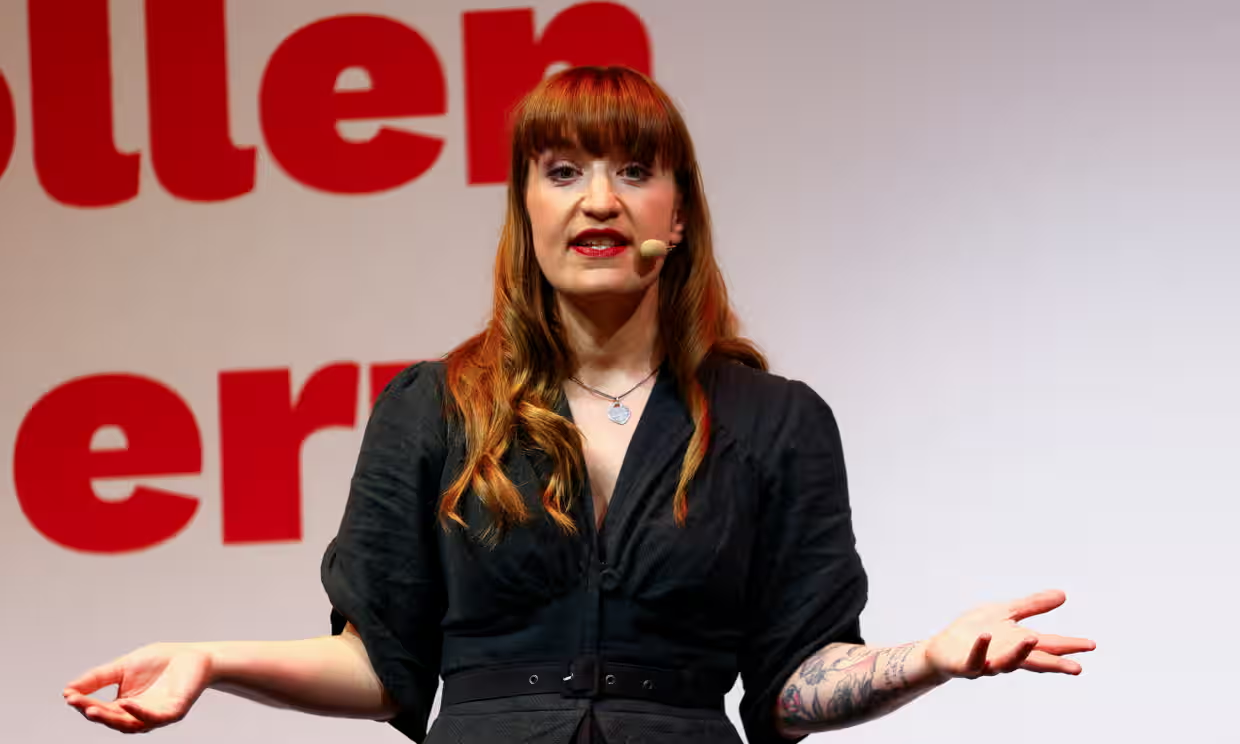
One of the reasons for the Linke’s sudden rise is its emerging new stars. Heidi Reichinnek, a 36-year-old member of parliament, has become one of the party’s most outspoken and popular figures. Reichinnek recently went viral on social media for her fiery speech in parliament, where she called out conservative leader Friedrich Merz for accepting support from the far-right AfD.
In her impassioned speech, Reichinnek condemned Merz’s hardline views on immigration and pointed out the dangers of aligning with extremist groups. Her direct and bold style has won her widespread praise, particularly among young voters who are hungry for fresh leadership and outspoken advocates for progressive causes.
Reichinnek’s rise within the Linke party is part of a broader shift towards youth-led political change that could reshape Germany’s political future in the coming years.
The Big Question: Can the Linke Make a Real Impact?
As the election approaches, the big question on everyone’s mind is whether the Linke party can actually turn its newfound popularity into electoral success. Despite its growing support, many still see the Linke as a fringe player in the German political scene, with little chance of challenging the dominance of larger, more established parties like the CDU (Christian Democratic Union) or the SPD (Social Democratic Party).
However, the party’s recent surge shows that there is a hunger for alternative political voices in Germany. Voters are dissatisfied with the status quo, and they’re looking for a party that offers a clear, bold vision for the future—something that Die Linke has successfully managed to deliver.
With its focus on addressing economic inequality, climate change, and social justice, the Linke party has carved out a unique space in the political landscape, offering a powerful voice for those who feel ignored by the mainstream parties.
What Does the Future Hold for Germany’s Left?
The final stretch of the German election campaign will likely be intense and unpredictable. The rise of the Linke party is just one part of a larger shift in the country’s political dynamic, as voters across Germany look for new solutions to long-standing problems.
As the Linke continues to build momentum, there’s a chance that it could disrupt the political landscape and surprise the nation with a strong performance on February 23rd.
Whether the Linke can truly become a dominant force in Germany’s future remains to be seen, but it’s clear that the party’s call for a more equal, democratic society is resonating with an increasing number of voters. The world will be watching closely to see what happens in Germany’s most critical election in years.
Conclusion: The Left’s Moment in the Spotlight
As Germany faces a political crossroads, the Linke party’s rise is a reminder that the left is still a powerful force in the country. While the political landscape may be shifting to the right, the Linke’s resurgence shows that democratic socialism, social justice, and equality continue to capture the hearts and minds of many voters.
Will the left manage to make a surprising comeback and challenge the established political order in Germany? Only time will tell.