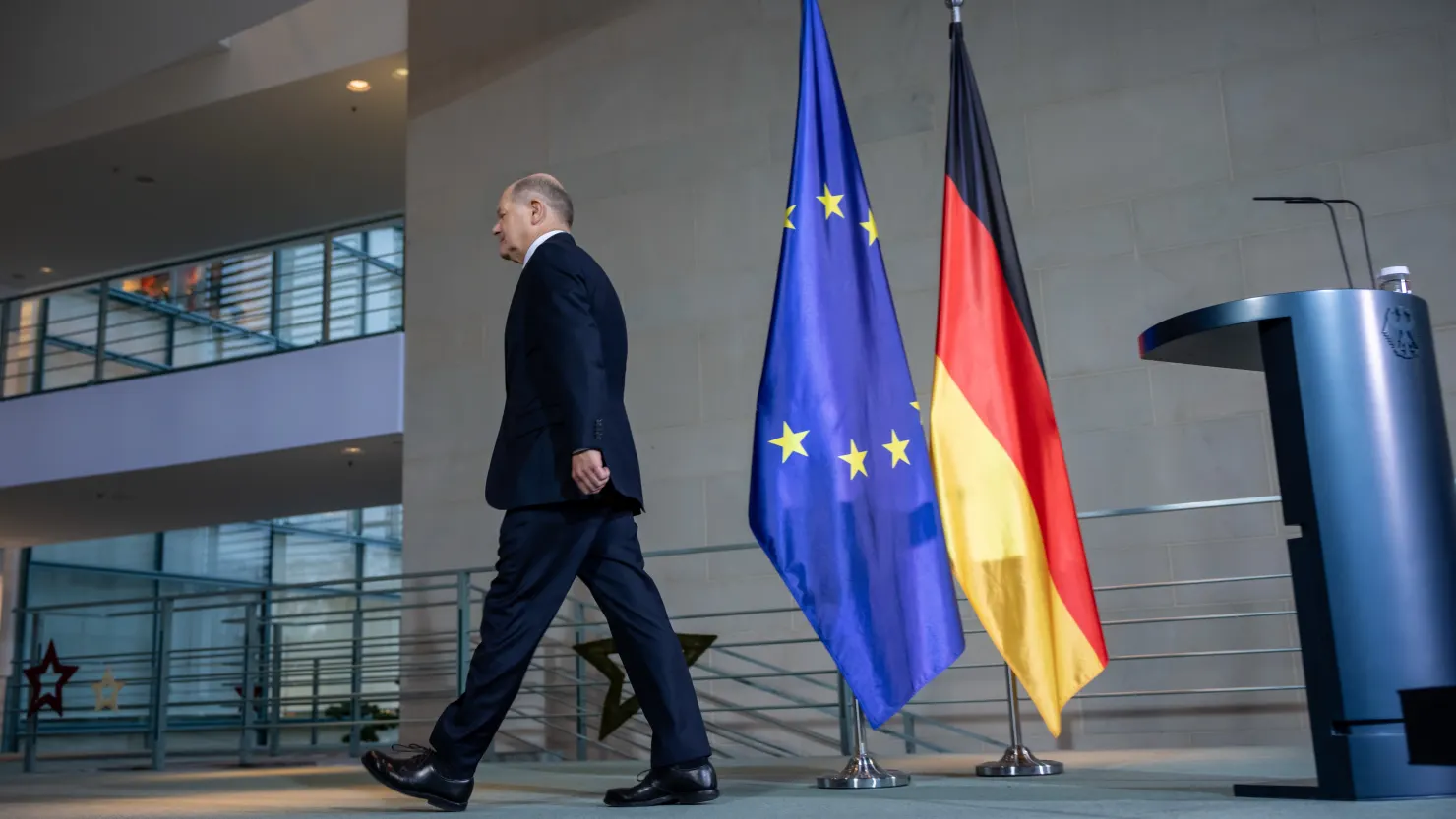
Olaf Scholz Loses Confidence Vote, Paving the Way for Germany’s Early Election in February

Germany’s Political Shake-Up: Chancellor Olaf Scholz Loses Confidence Vote
On Monday, German Chancellor Olaf Scholz lost a confidence vote in the Bundestag (Germany’s parliament), setting the stage for an early election in February 2025. This marks a significant moment in German politics, as it’s only the sixth time in history that such a vote has been held, and the fourth time a Chancellor has lost it.
Scholz, who had called for this vote himself, was actually hoping to lose. His goal was to trigger early elections, which were originally scheduled for 2025 but will now be moved up to February 23, 2025.
Why Did Scholz Call for the Vote?
Scholz’s decision to call the vote in November 2024 was part of a strategic move to break the deadlock in his government. After months of political turmoil, Scholz’ coalition government—made up of his own Social Democratic Party (SPD), the Free Democratic Party (FDP), and the Green Party—had essentially fallen apart.
Tensions within the coalition reached a boiling point after Scholz sacked Finance Minister Christian Lindner. Lindner had clashed with the other parties, particularly over Germany’s economic policy and the 2025 budget. His disagreements with SPD and Green Party members highlighted deep divisions within the government, and ultimately, Scholz believed it was better to step aside and allow for fresh elections.
The Fallout from Scholz’s Failed Coalition
While Scholz’s SPD and the Green Party will continue in government as a minority administration, they will now have to operate without the majority needed to pass key laws. Essentially, this makes Scholz a lame duck Chancellor, unable to push forward any significant policies or legislation.
One of the most pressing issues is the 2025 national budget. The government was unable to agree on the budget, which means the country will operate under a provisional budget until a new government is formed. This uncertainty adds to the growing concerns about Germany’s economic stability, especially as it faces challenges such as inflation, energy crises, and slow economic growth.
What Happens Next? A New Election in February
Following the vote, German President Frank-Walter Steinmeier now has 21 days to dissolve parliament. After the dissolution, a new election must be held within 60 days, meaning the election is set for February 23, 2025.
Germany’s political system includes steps designed to keep things calm when a government falls apart, hoping to avoid the kind of political chaos that plagued the Weimar Republic in the 1930s. This era was marked by instability and division, which played a significant role in the rise of the Nazi regime. The procedures in place now aim to prevent such turmoil and ensure the smooth transition of power.
Early Campaigning: Who’s in the Running for Chancellor?
With the election date set, political parties in Germany have already started preparing. Campaigning has begun, with discussions focusing on key issues such as immigration, tax reform, economic recovery, and social security.
The two main candidates for Chancellor are:
- Olaf Scholz: Despite his coalition collapsing, Scholz remains the SPD’s candidate for Chancellor. He has promised to continue working toward economic stability and addressing the country’s long-term challenges.
- Friedrich Merz: The leader of the Christian Democratic Union (CDU), Merz is now seen as the front-runner. The CDU, along with its Bavarian ally, the Christian Social Union (CSU), is leading the polls and appears poised to become the largest party in the new Bundestag. Merz, if elected, would likely work to form a new coalition government, either with the SPD or possibly the Green Party.
As parties debate their positions, the full manifestos will be revealed in the coming weeks, detailing their plans for tackling Germany’s most pressing issues.
The Economic Challenge Ahead
Regardless of who wins the upcoming election, Germany’s economic challenges will remain front and center. Kallum Pickering, Chief Economist at Peel Hunt, noted that the economic slowdown and weak demand will likely force the new government to introduce fiscal stimulus. Even if changes to Germany’s strict debt brake aren’t made right away, Pickering believes that economic pressure will eventually lead to calls for more government spending to boost the economy.
“A fiscal stimulus could improve Germany’s economic outlook and help address issues such as unemployment and slow growth,” said Pickering. “If the new government has a strong enough majority, they will likely be forced to take action.”
What’s at Stake in the Election?
The upcoming election could reshape Germany’s political landscape. The country’s economy has been sluggish in recent years, and the new Chancellor will need to take bold steps to revive growth and manage rising costs of living. Germany’s role as Europe’s largest economy means the outcome of this election will have a ripple effect throughout the European Union and beyond.
Key areas of focus in the campaign will likely include:
- Economic Reform: Tackling the challenges of inflation, energy shortages, and sluggish growth.
- Social Security and Welfare: Addressing rising costs and ensuring the future of Germany’s generous social safety net.
- Climate Change and Energy: Balancing Germany’s environmental goals with economic needs, particularly in the wake of the energy crisis exacerbated by the war in Ukraine.
- Immigration and Integration: Dealing with issues surrounding migration and the integration of refugees, especially in light of rising populism in parts of Europe.
Could Germany See a Political Revolution?
While Scholz’s downfall is a sign of political instability, it also presents an opportunity for change. Friedrich Merz and the CDU are seen as the main challengers to the SPD’s long-standing dominance in German politics. With public opinion increasingly swaying in favor of the CDU, it’s possible that Germany could see a shift towards center-right policies, especially if the CDU partners with the Green Party or SPD to form a new coalition government.
But even if Merz becomes Chancellor, the road ahead won’t be easy. Germany’s economic malaise won’t be solved overnight, and the next government will need to find ways to stimulate growth, improve the country’s global competitiveness, and maintain the social safety nets that have been a hallmark of Germany’s post-war success.
Conclusion: A Turning Point for Germany
Germany’s political crisis, marked by Chancellor Scholz’s loss of the confidence vote, sets the stage for an exciting election season. With February’s election fast approaching, Germany’s political future is uncertain. The upcoming government will face immense challenges, but the right leader may be able to turn things around and guide Germany through one of the most turbulent periods in its modern history.