
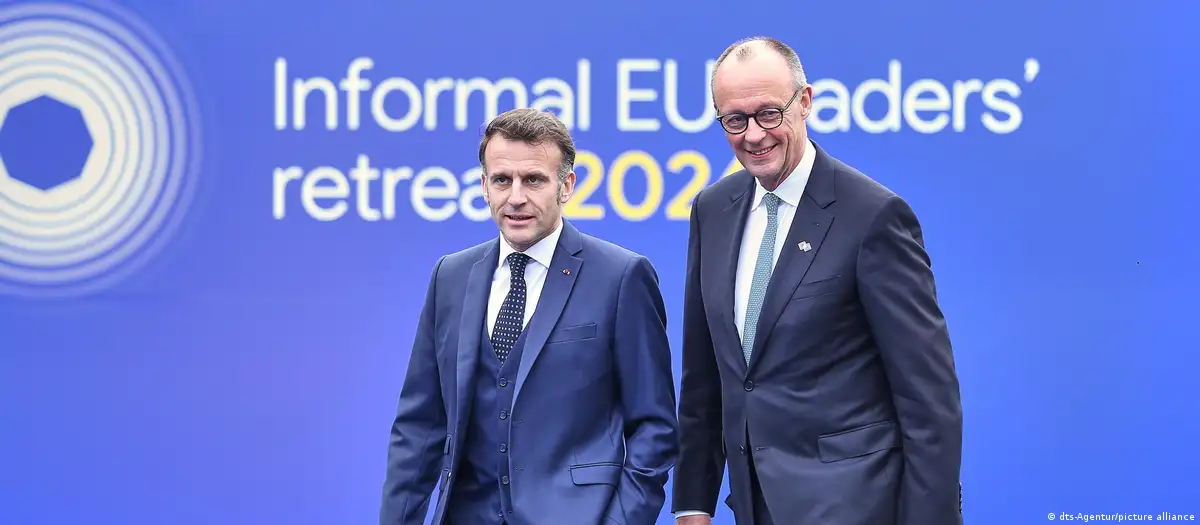

Europe’s push for deeper defense cooperation is facing fresh uncertainty after German Chancellor Friedrich Merz signaled that Berlin may reconsider its role in the Future Combat Air System project.
The move has raised concerns about the future of one of Europe’s most ambitious joint military programs — and about the broader unity of European defense efforts.
What Is the FCAS Project?
A Flagship Franco-German Initiative
The Future Combat Air System (FCAS) is a joint initiative launched in 2017 by Germany and France to develop a next-generation, nuclear-capable fighter jet and integrated air combat system.
The project was championed by then-German Chancellor Angela Merkel and French President Emmanuel Macron as a symbol of European strategic autonomy.
FCAS is intended not only to replace aging fighter fleets but also to strengthen Europe’s defense industry and reduce reliance on the United States.
Merz Signals a Rethink
In comments on a German podcast, Merz said the collaboration with France to build the advanced warplane is “not what we currently need in the German military.”
The remarks mark a significant shift in tone and have fueled speculation that Germany could scale back or even exit the program.
Such a move would represent a serious setback for European defense integration, particularly at a time when EU leaders are calling for greater self-reliance.
Defense Cooperation Under Pressure
Trump Factor and European Autonomy
Europe’s renewed push for defense collaboration has been driven in part by uncertainty over U.S. security commitments, especially during the presidency of Donald Trump.
Concerns about diminished American support have encouraged EU countries to strengthen joint capabilities and invest in homegrown defense projects.
Germany stepping back from FCAS would complicate that strategy.
Franco-German Tensions
The simmering dispute between Berlin and Paris has now become public, raising questions about the durability of the traditional Franco-German engine that often powers European initiatives.
Defense experts warn that fragmentation could weaken Europe’s collective position.
Christian Mölling, director of the Berlin-based think tank European Defence In a New Age (EDINA), cautioned that Germany should avoid isolating itself from broader European cooperation efforts.
Why FCAS Matters
The FCAS program is more than just a fighter jet. It represents:
- Joint technological development
- Industrial cooperation across borders
- A political statement about European unity
If Germany withdraws or significantly reduces its commitment, the project’s future could be in jeopardy — potentially reshaping Europe’s defense landscape.
What Comes Next?
No final decision has been announced, and negotiations between Germany and France are likely to continue.
However, Merz’s remarks have already introduced uncertainty into Europe’s defense planning at a delicate moment.
With geopolitical tensions high and trust in transatlantic security arrangements under strain, the fate of FCAS could become a defining test of Europe’s ambition to act as a unified military force.

